Beyz Assistant Settings and Context Guide
October 1, 2025(Last edited on: November 1, 2026)By Beyz Editorial Team
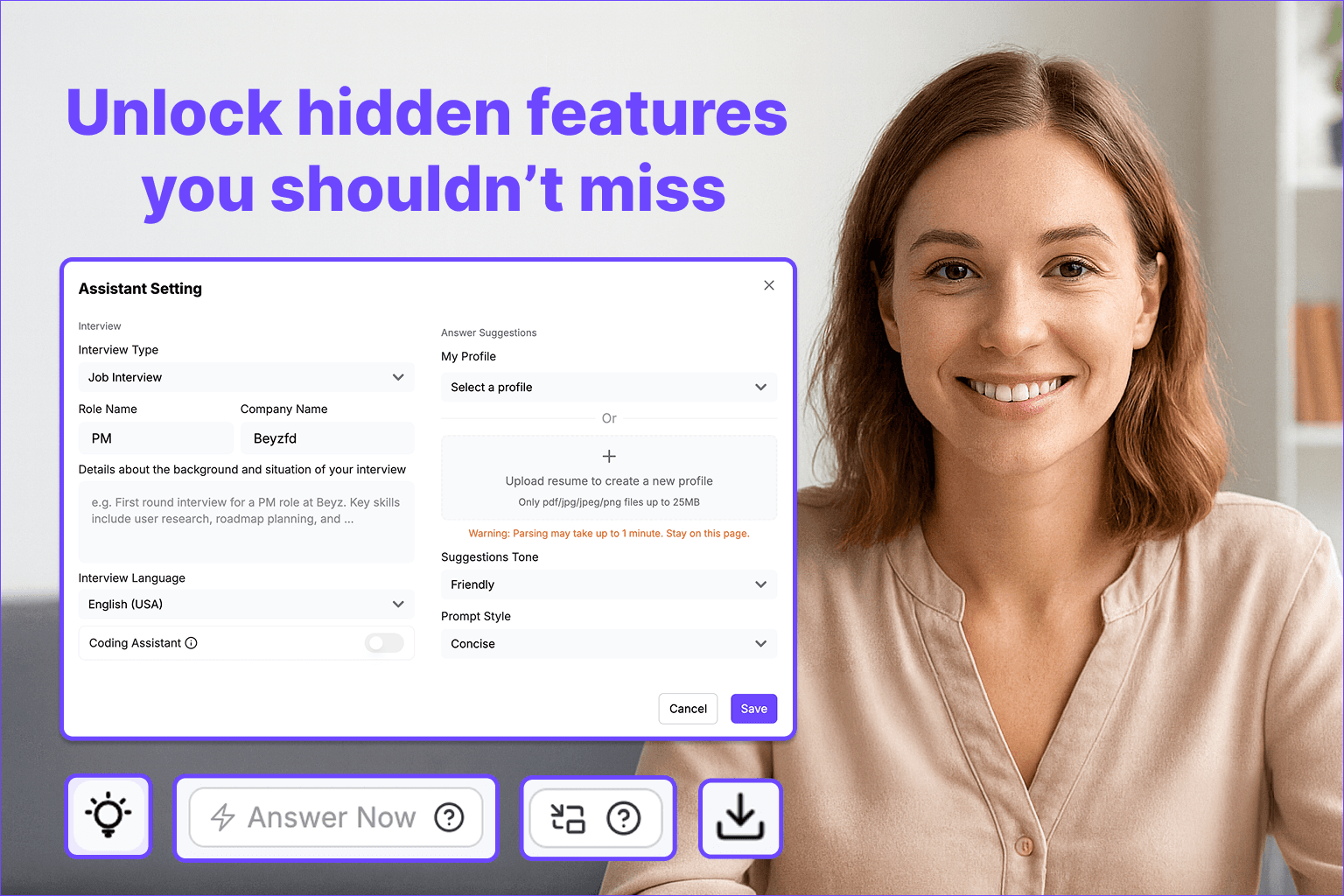
The short answer
Before your interview or meeting, set Beyz up in five moves: pick the right assistant (Interview vs Meeting), attach the files you want it to use (resume, job description, agenda), prepare a concise cheat sheet, set your language needs, and choose where the prompts will appear (browser or the Invisible Desktop overlay). Beyz advertises real-time suggestions for interviews and uses your files for context, plus transcription/translation and summaries in meetings Real-Time AI Interview Assistant and Real-Time Meeting Assistant. If you want prompts visible but unseen on screen shares, use Invisible Desktop.
Step-by-step setup for interviews and meetings
1) Choose your mode: Interview vs Meeting
- Interview prep and live interviews: Use the Interview Assistant. Beyz promotes real-time answering hints tailored to your profile and interview context Real-Time AI Interview Assistant.
- Client calls or internal meetings: Use the Meeting Assistant for a teleprompter-style stream of hints drawn from your files, plus live transcription, translation, and a post-call summary with topics/actions/questions Real-Time Meeting Assistant.
Tip: If you plan to share your screen or switch between apps, plan to run the desktop overlay so prompts stay visible while remaining invisible to screen sharing and recording Invisible Desktop.
2) Attach the right files (what to include and why)
Beyz says its assistants can be prompted by your files (think resume, job description, role notes for interviews; agenda, deck, product FAQ for meetings) so the suggestions reflect your specific context Real-Time AI Interview Assistant, Real-Time Meeting Assistant.
Practical picks:
- Interviews: resume, job description, company/role brief, key project one-pagers, portfolio links.
- Meetings: call agenda, deck/PDF, technical notes or solution outline, customer Q&A doc, relevant product specs.
Keep files short and specific. Rename files to match the topic they support (e.g., “security-faq.pdf”, “payments-case-study.pdf”) so it’s obvious what to reference at a glance.
3) Build a lean cheat sheet (and keep it near)
Beyz highlights role‑tailored interview cheat sheets as a first-class feature Interview Cheat Sheets. Make one page per role or meeting type with:
- Top 3–5 stories (STAR or CARL structure)
- Metrics you can cite
- Frameworks or checklists you actually use
- Quick rebuttals/FAQs relevant to the call
If you want a detailed walkthrough, see the tutorial: AI Interview Cheat Sheet: Beyz Guide.
4) Set language and accessibility
For multilingual interviews or global meetings:
- Beyz states it supports 10+ languages with real-time translation and allows adding up to two secondary languages so it can keep up if the interviewer switches languages AI Interview Assistant overview, Real-Time Transcription and Translation.
Use this when you expect code-switching or a bilingual panel. Keep your cheat sheet in your strongest language; let transcription/translation help you track the conversation.
5) Decide where the prompts appear (browser vs desktop overlay)
- Browser: Works fine if you stay in one tab. Meeting Assistant will show a teleprompter-style stream with hints and notes Real-Time Meeting Assistant.
- Desktop overlay: If you’ll switch windows, share screens, or code, use Invisible Desktop. Beyz says it floats above Zoom/Meet/Teams and your IDE without stealing focus, and is invisible to screen sharing and recording.
Useful overlay controls Beyz documents:
- Hide/summon the overlay instantly
- Adjust opacity without leaving the keyboard
- Enable click‑through so your cursor interacts with the app behind the overlay
- Scroll hint/code pads with keyboard navigation These are part of the app’s global shortcuts and content‑protection design Invisible Desktop.
6) Do a two‑minute dry run
- Open your assistant and one target file.
- Ask a likely question out loud or via practice mode. Beyz promotes a 24/7 practice mode you can run with the same context you’ll use live Solo practice.
- Check whether the suggestions reference the right doc facts and phrasing. If not, trim or swap files to reduce noise.
- Confirm your overlay visibility and keyboard controls before the real call Invisible Desktop.
Practical checklists
Interview checklist (behavioral or product)
- Files: resume, job description, 2–3 project briefs
- Cheat sheet: 3–5 stories with metrics and lessons learned
- Language: add a secondary language if you expect switches
- Display: overlay installed and tested; opacity and hide/summon set to muscle memory Invisible Desktop
- Dry run: one question in practice mode to verify references Solo practice
Meeting checklist (sales, stakeholder, stand‑up)
- Files: agenda, deck/PDF, product FAQ or spec
- Notes: pre‑written key points as a compact card
- Transcription/translation: on when cross‑border or hybrid Real-Time Transcription and Translation
- Summary capture: confirm you’ll get a summary with topics/actions/questions afterward Meeting summary
- Display: choose browser teleprompter or overlay depending on screen‑share needs
Coding interview add‑ons
- Enable the coding workflow you plan to use. Beyz advertises a coding assistant to break down logic, complexity, and solutions Coding Assistant.
- If your interview includes on‑screen problem solving, run the overlay so hints stay visible but hidden from the share Invisible Desktop.
- Want a deeper dive on solving modes? Read the guide: AI Coding Screen Solver: Choosing the Right Mode.
Context hygiene: how to keep suggestions on‑topic
- One role, one set: Don’t overload your session with mixed roles or clients. Swap files when the audience changes.
- Keep files short: Use focused PDFs or one‑pagers over long decks.
- Name for retrieval: Title files by the problem they answer (e.g., “latency-case.pdf”).
- Update after calls: If a new question comes up frequently, add a concise note or example to your cheat sheet.
Invisible Desktop basics (for privacy and control)
If you need prompts visible while screen sharing, install the app beforehand. Beyz states the overlay:
- Stays on top without stealing focus
- Can be hidden/summoned or faded via keyboard
- Lets you click through to the app behind it
- Is invisible to Zoom, Meet, Teams, OBS, and QuickTime recordings via native OS content protection You can review the controls and behavior here: Beyz Invisible Desktop.
When to use Meeting Assistant vs Interview Assistant
- Use Interview Assistant when the goal is graded answers and behavioral or technical Q&A. It’s positioned for real-time hints tailored to the interview context Real-Time AI Interview Assistant.
- Use Meeting Assistant when the conversation is ongoing collaboration or customer calls that benefit from a teleprompter, transcription/translation, and an automatic summary Real-Time Meeting Assistant.
FAQs
Will interviewers see my prompts?
Beyz says the Invisible Desktop overlay is invisible to screen sharing and common recorders, and can be hidden or faded on demand Beyz Invisible Desktop. Always test your setup with your actual meeting app before going live.
Do I need the desktop app?
No. If you stay in one tab and don’t need an overlay, you can work in the browser—especially for meetings using the teleprompter flow Real-Time Meeting Assistant. Use the desktop overlay when you need prompts across windows or while sharing screens Beyz Invisible Desktop.
Where can I find a complete setup walkthrough?
- Interviews: How to Set Up the Beyz Interview Assistant
- Meetings: How to Use the Beyz Meeting Assistant
- Teleprompter tips for video calls: Interview Teleprompter: Setup for Live Video Calls
Set these basics once and you’ll enter each conversation with the right context loaded, the right display mode chosen, and a fast way to practice and verify before you go live.
Sources
- AI Interview Assistant | Beyz AI
- Real-Time Meeting Assistant | Beyz AI
- Beyz Invisible Desktop | Beyz AI